5 August 2026
Dubai Islands: a waterfront buyer’s guide
Five islands, five different programmes. What orientation, bridge access and beach rights actually change.
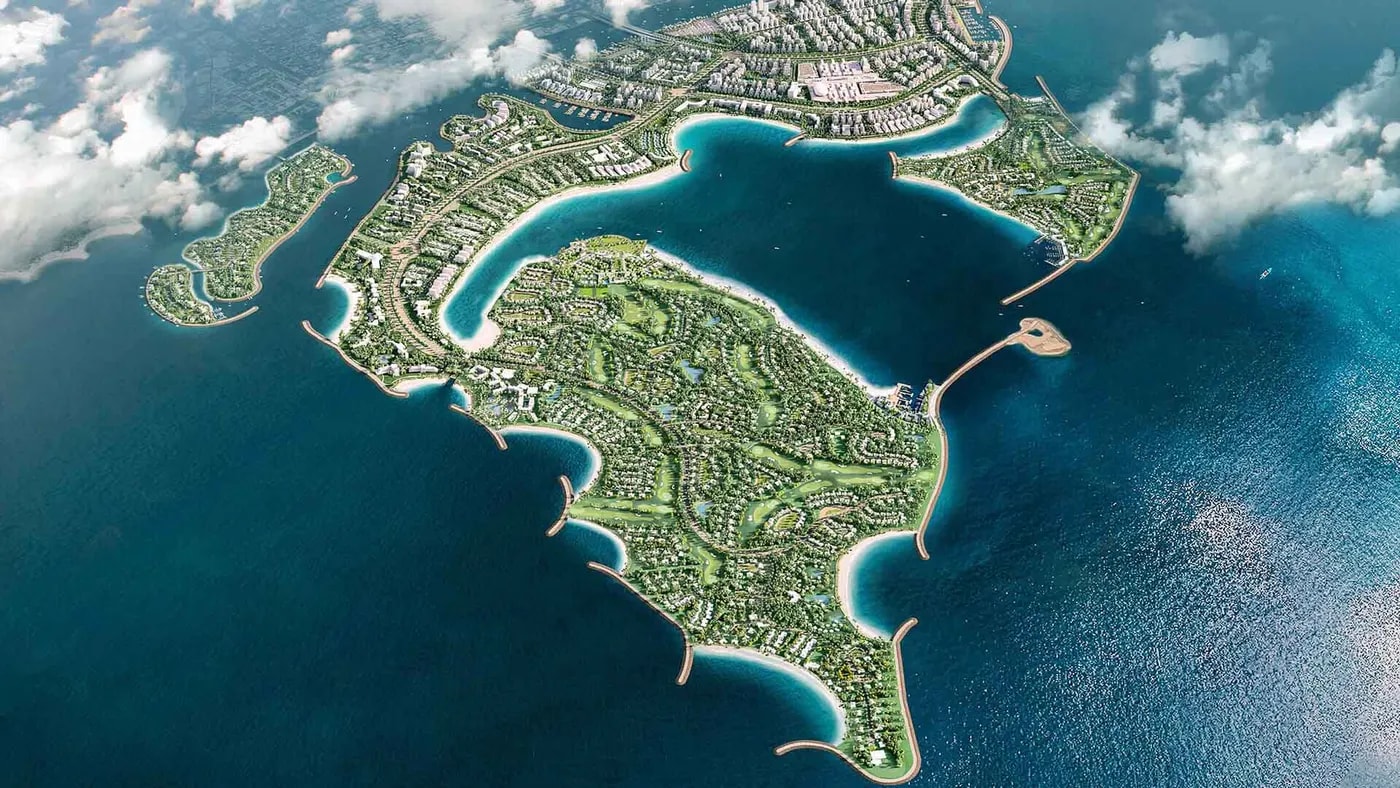
Dubai Islands is the first waterfront masterplan in the emirate to be released as five separate islands rather than one continuous development. That structure changes what "beachfront" actually means here, and it is worth understanding before comparing prices.
What the five islands do differently
Each island carries a distinct programme. Island A is the marina and hospitality core; Islands B and C are residential with beach clubs at grade; Islands D and E are held for lower-density and cultural uses. A residence on Island B facing west has a different afternoon light, a different noise profile and a different resale pool than an equivalent unit two hundred metres away on Island A.
What to check before you sign
Three things separate a good island purchase from an average one.
- Orientation. West-facing residences get the sunset over open water; east-facing ones get the Deira skyline and morning sun. Both are defensible; they are not interchangeable.
- Distance to the bridge. Access to the mainland runs through a limited number of crossings. Drive it at peak hour before you commit.
- Beach rights. Some buildings hold allocated beach frontage; others share a community beach. The difference is written into the community rules, not the brochure.
How pricing behaves
Waterfront stock on the islands has traded at a premium to comparable mainland districts since the first handovers. The premium is not uniform: it concentrates in buildings with direct beach frontage and thins quickly one row back. When you model yield, model the row you are actually buying in.